
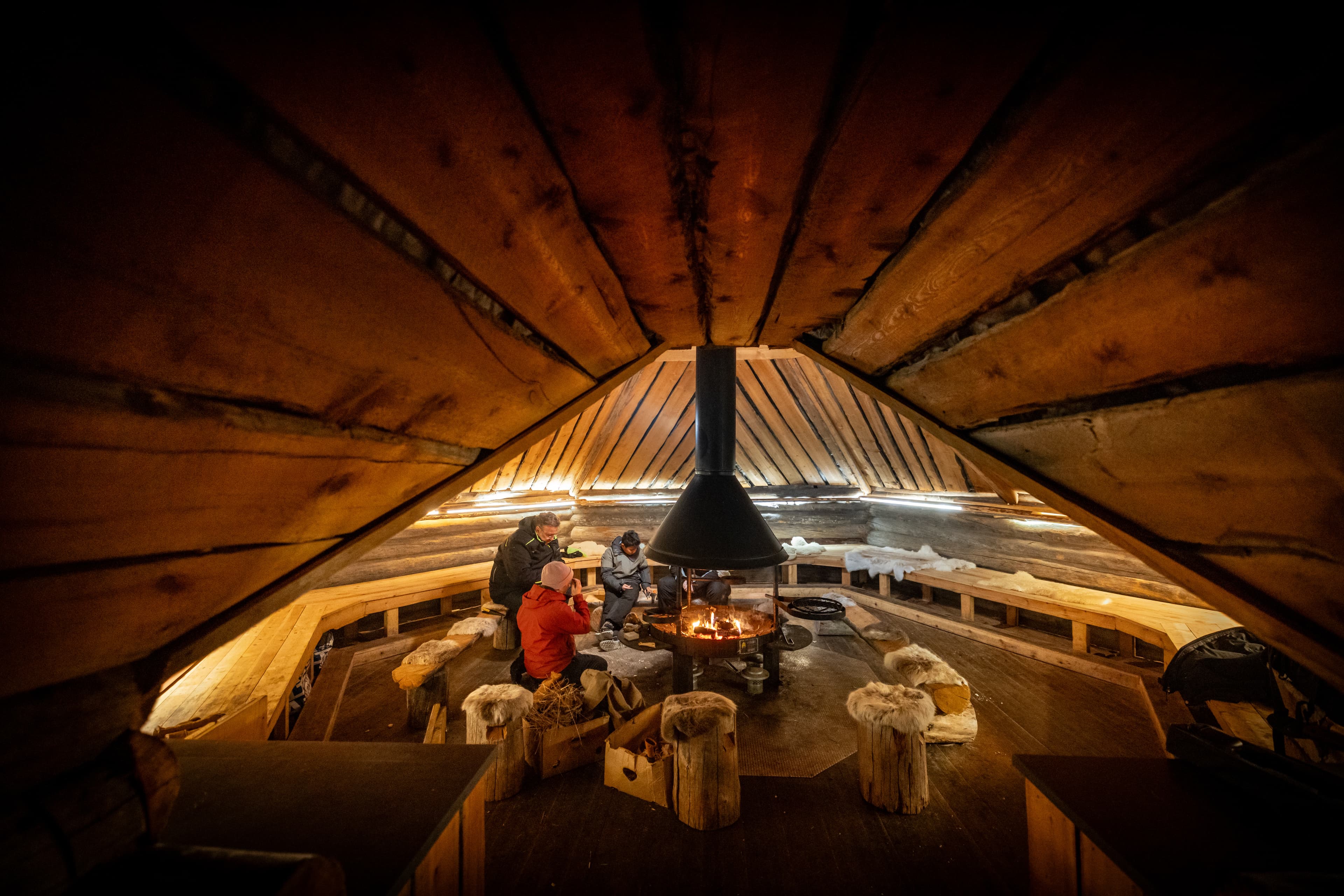
Discover the healing power of forest bathing in Pyhä-Luosto National Park, where ancient boreal forests, pristine Arctic air, and Finnish sauna culture create the ultimate nature therapy experience.
The Japanese call it shinrin-yoku - literally "forest bath." The practice is simple: go into a forest, slow down, engage your senses, and let the environment work on you. No hiking agenda. No fitness goals. No podcast in your earbuds. Just deliberate, unhurried immersion in a living forest.
The science behind forest bathing is now substantial. Decades of research, beginning in Japan and now replicated worldwide, show that spending time in forests reduces cortisol levels, lowers blood pressure, strengthens immune function, and measurably improves mood and cognitive clarity. Trees release volatile organic compounds called phytoncides that our immune systems respond to - breathing forest air literally changes your blood chemistry.
All forests offer these benefits. But some forests offer them more powerfully than others. And the old-growth boreal forests of Finnish Lapland - particularly in and around Pyhä-Luosto National Park - may be among the most effective forest bathing environments on earth.
Why Lapland Forests Are Exceptional for Forest Bathing
Not all forests are equal when it comes to shinrin-yoku. The factors that determine a forest's therapeutic potency include age, biodiversity of tree species, air quality, noise levels, and the density of human activity. On every one of these measures, the forests around Pyhätunturi score extraordinarily well.
Old-Growth Boreal Forest
Pyhä-Luosto National Park protects some of Finland's oldest standing forest. These are not plantation trees - they're ancient Scots pine and Norway spruce that have been growing for centuries, shaped by wind and snow into forms that no managed forest produces. The canopy is layered, the ground cover is deep with lichen and moss, and the understory is rich with dwarf shrubs - bilberry, lingonberry, and crowberry.
Old-growth forests produce higher concentrations of phytoncides than young forests. The chemical complexity of an ancient forest - dozens of volatile compounds released by mature trees, decomposing wood, lichens, and moss - creates a richer biochemical environment for your lungs and immune system to respond to.
The Cleanest Air in the World
Finland consistently ranks among the top countries for air quality, and Lapland takes this further. The nearest significant source of air pollution is hundreds of kilometres away. The air in Pyhä-Luosto National Park has been measured as among the cleanest breathable air on the planet - comparable to mid-ocean readings.
When you practise forest bathing here, every breath draws in air that is essentially free of particulate matter, vehicle emissions, or industrial compounds. The forest compounds - terpenes, pinene, limonene - arrive in your lungs without competing with pollutants. The effect is noticeably different from forest bathing near any city.
Profound Silence
Noise is one of the most underestimated barriers to therapeutic nature immersion. Even in protected forests near populated areas, you'll hear distant traffic, aircraft, machinery, or the accumulated hum of civilisation that acoustic ecologists call "anthrophony."
In the forests around Pyhätunturi, you hear almost nothing. In winter, when snow blankets the ground and absorbs sound, the silence can feel absolute - a physical sensation rather than just the absence of noise. The only sounds are wind in the trees, the occasional crack of a frost-stressed trunk, and perhaps the call of a Siberian jay or great grey owl.
This silence is itself therapeutic. Research on acoustic environments shows that exposure to natural quiet reduces sympathetic nervous system activation - the fight-or-flight response that modern life keeps permanently engaged. In the silence of a Lapland forest, your nervous system begins to recalibrate.
Minimal Human Presence
Pyhätunturi is not a mass tourism destination. Even in peak season, you can walk the trails of Pyhä-Luosto National Park for an hour without seeing another person. In the forests off the main trails, you may not see anyone all day. This matters for forest bathing because the awareness of other humans changes your neurological state - your brain allocates attention to social monitoring even when you don't notice it consciously.
In an empty forest, that monitoring switches off. Your attention becomes fully available for sensory engagement with the environment. This is when forest bathing moves from pleasant walk to genuine therapy.
For more on why Pyhätunturi offers a different kind of Lapland experience, see our Pyhä vs Rovaniemi comparison.
The Practice: How to Forest Bathe in Lapland
Forest bathing is not hiking. It's not exercise. It's a deliberate practice of sensory immersion that works best when you abandon any goal other than being present. Here's how to approach it in the Lapland boreal forest:
Walk Slowly - Then Slower
The pace of forest bathing is roughly one-quarter of normal walking speed. You're not going anywhere. You're arriving where you already are. In the Lapland forest, this means taking perhaps 30 minutes to cover what you'd normally walk in five. Stop often. Stand still. Let your breathing slow to match the pace of the forest.
Engage All Five Senses
Touch the bark of an old pine - feel the rough plates that have weathered centuries of Arctic storms. Smell the resin that bleeds from cracks in the wood; in cold air, it's sharp and clean, one of the purest scents in nature. Listen to the layers of silence - there is always something to hear, even when you think there's nothing. Watch the light filter through the canopy, especially in winter when low-angle sunlight turns the snow pink and the shadows blue.
In summer and autumn, taste the wild berries that grow everywhere underfoot. Bilberries in July and August, lingonberries in September, cloudberries in the bogs. These are not farmed berries - they're wild, intense, and part of the forest.
Sit With a Tree
This sounds strange until you do it. Choose an old tree - a pine with a wide trunk and deep bark - sit against it, and stay for twenty minutes. Feel the solidity of it behind you. Look up through the branches. Let your thoughts do what they will, without chasing or organizing them.
In Japanese forest therapy, this practice is called "tree sitting" and it's considered one of the most effective single techniques. The physical contact with the tree, combined with the sensory richness of the forest around you, creates a grounding effect that's difficult to replicate through any other method.
Winter Forest Bathing
Forest bathing in winter Lapland has a quality that no other season or location can match. The snow transforms the forest into something both familiar and alien - the same trees, but wearing thick white coats that change their shapes entirely. The cold sharpens your senses. Your breath is visible. The air smells clean in a way that warm air never does.
Winter forest bathing requires appropriate clothing - layers of wool and technical fabrics that keep you warm while standing still. Our what to pack for Lapland in winter guide covers exactly what you need.
The cold itself can be part of the therapy. Brief, controlled exposure to cold has been shown to activate the vagus nerve, reduce inflammation, and improve mood. Alternating between the cold forest and a warm sauna amplifies both experiences - which brings us to the uniquely Finnish dimension of Arctic wellness.
Sauna and Forest: The Finnish Wellness Cycle
Finland didn't invent forest bathing, but it has been practising something remarkably similar for centuries - just with the addition of heat and water. The traditional Finnish wellness cycle is: forest, sauna, cold water, rest, repeat.
In a traditional lakeside sauna near Pyhätunturi, this cycle plays out naturally:
- Forest walk - slow, sensory, grounding
- Sauna - intense dry heat (80-100°C) with steam from water thrown on hot stones (löyly)
- Cold exposure - stepping into snow, a cold lake, or an ice hole
- Rest - sitting quietly, letting the body recalibrate
- Repeat - each cycle deepens the effect
This cycle engages the autonomic nervous system in a way that forest bathing alone doesn't. The heat dilates blood vessels and releases tension from deep muscle tissue. The cold exposure triggers a surge of norepinephrine - a neurotransmitter associated with alertness and mood elevation. The rest period allows the body to integrate both stimuli. And the forest provides the sensory backdrop that keeps the experience grounded in nature rather than feeling like a gym routine.
For a deeper understanding of this tradition, read our guide to Finnish sauna culture.
Ice Floating as Water-Based Mindfulness
If forest bathing is mindfulness on land, then ice floating is its counterpart in water. The two practices share a common principle: slow down, let go of goals, and allow the natural environment to work on your nervous system.
When you float in the frozen lake at Pyhätunturi - wearing a thermal dry suit that keeps you warm and dry - your body becomes weightless. The water supports you completely. Your muscles release tension you didn't know you were carrying. Your field of vision is reduced to sky and the tops of trees. The only sound is your own breathing.
This is a form of sensory reduction that parallels what happens in a float tank, but with one crucial difference: you're outdoors, in nature, surrounded by ancient forest and Arctic sky. You're not in a controlled environment - you're in the real world, and the real world is profoundly peaceful.
The physiological effects overlap significantly with forest bathing: reduced cortisol, lower heart rate, improved parasympathetic nervous system tone. But floating adds a dimension of physical surrender that walking through a forest doesn't. You're not just slowing down - you're stopping entirely, letting the water hold you, letting go of even the effort of standing upright.
Our ice floating in Lapland guide explains the full experience. For the night version - floating under the northern lights - see aurora floating in Lapland.
The Mental Health Benefits of Arctic Nature
The therapeutic potential of Arctic environments has begun to attract serious research attention. Studies from Nordic universities have found that exposure to Arctic nature - characterised by extreme seasonality, low light levels, cold temperatures, and vast open spaces - produces distinct psychological effects that differ from nature exposure in temperate or tropical environments.
Light and Darkness
The extreme light cycles of Lapland - midnight sun in summer, polar night in winter - affect circadian rhythms in ways that can be both challenging and therapeutic. Short-term visitors during the winter dark period often report a paradoxical sense of calm and inward focus. The darkness removes visual distraction and encourages introspection. Combined with the physical practices of sauna, floating, and forest immersion, this can create a profound reset.
Cold as Therapy
Cold exposure is increasingly recognised as a legitimate therapeutic intervention. Research by physiologist Susanna Søberg and others has demonstrated that regular cold exposure improves brown fat activation, reduces systemic inflammation, and has measurable effects on depression and anxiety.
In Lapland, cold isn't something you seek out artificially - it's the ambient environment. Simply being outdoors in -10°C to -25°C air provides low-grade cold exposure throughout the day. Combined with more intense cold exposure from ice floating or post-sauna snow immersion, visitors experience a natural cold therapy cycle without needing to manufacture it.
Awe and Perspective
Psychologists describe "awe" as the emotion triggered by encountering something vast that challenges your existing frame of reference. Arctic landscapes - the scale of the fells, the depth of the forest, the immensity of the night sky, the northern lights - are reliable producers of awe.
Research on awe shows that it reduces self-focus, increases prosocial behaviour, and creates a sense of time expansion - the feeling that time has slowed down. For people dealing with stress, burnout, or the accumulated pressure of demanding lives, awe experiences can provide a perspective shift that weeks of conventional relaxation don't achieve.
The aurora floating experience is perhaps the most concentrated dose of awe we offer. Floating in water, looking up at the northern lights filling the sky - your usual frame of reference simply dissolves.
Building an Arctic Wellness Itinerary
A wellness-focused visit to Pyhätunturi can be structured around the natural rhythm of the Arctic day. Here's what a restorative itinerary might look like:
- Morning: Forest bathing walk in Pyhä-Luosto National Park. Slow, sensory, 60-90 minutes. Return for a warm drink and light breakfast.
- Midday: Ice floating - the main physical reset of the day. 30-45 minutes in the water, followed by warming up with hot drinks by a fire.
- Afternoon: Rest, read, or take a gentle snowshoe walk. In the twilight months (November-January), the blue hour light creates an extraordinary atmosphere for quiet reflection.
- Evening: Sauna session - wood-fired, lakeside, with cold exposure between rounds. Then a simple, nourishing meal built from local ingredients.
- Night (October-March): If conditions allow, aurora floating - the crown jewel of Arctic wellness. Floating under the northern lights with no agenda except being present.
This rhythm - forest, water, heat, cold, rest, sky - mirrors the natural cycles that human biology evolved with and that modern life has stripped away. A few days of living by this rhythm is often enough to produce a noticeable shift in sleep quality, mood, and mental clarity.
Active Wellness: Movement in the Arctic
Forest bathing and floating represent the contemplative end of Arctic wellness. But for those who find their reset through movement, Pyhätunturi offers active options that are equally immersive:
- Winter SUP - stand-up paddleboarding on open water surrounded by frozen landscape. The balance demands complete presence - there's no room for distraction when you're standing on a board in Arctic water.
- Snow surfing - riding the powder-covered fells. Physical exertion combined with the flow state that comes from navigating natural terrain.
- Arctic bushcraft - fire-making, shelter-building, and survival skills. These practices are inherently mindful: they require focus, patience, and physical engagement with natural materials.
- Winter fishing - sitting on ice, watching a line, waiting. Meditation disguised as a hobby.
Explore our full range of experiences on our adventures page.
Practical Considerations
When to Come for Forest Bathing
Forest bathing works in every season in Lapland, but each season offers something different:
- Summer (June-August): Midnight sun, green forests, wildflowers, berries. Long days allow extended immersion. The forests are alive with birdsong and insect activity.
- Autumn (September-October): Ruska - the Lapland autumn colour season. The fell slopes turn gold, red, and orange. The air cools. The first auroras appear. This may be the single best season for forest bathing in Lapland.
- Winter (November-March): Snow-covered forests, extreme silence, crystalline air. Cold-enhanced alertness. Combined with sauna and floating, this creates the most intense wellness cycle.
- Spring (April-May): Snow melts, rivers flow, migrating birds return. The contrast between lingering snow and emerging green creates a sense of renewal that mirrors inner transformation.
Planning Your Trip
If you're new to Lapland, start with our planning your first trip to Lapland guide. It covers travel logistics, accommodation options near Pyhätunturi, and what to expect on the ground.
For winter visits, our what to pack for Lapland in winter guide is essential - proper clothing makes the difference between enjoying the cold and enduring it.
Pyhätunturi is accessible via Rovaniemi airport (1.5 hours by car) or Kittilä airport (1 hour). Both receive regular flights from Helsinki. For adults travelling without children and looking for depth rather than entertainment, see our guide to Lapland activities for adults.
The Science of Why This Works
The combined effect of forest bathing, cold exposure, heat therapy, floating, and Arctic immersion isn't just additive - it's synergistic. Each practice activates different recovery pathways:
- Forest bathing reduces cortisol and boosts NK (natural killer) cell activity via phytoncides
- Cold exposure activates brown fat, releases norepinephrine, and reduces inflammation
- Sauna heat increases growth hormone release, improves cardiovascular function, and relaxes deep muscle tissue
- Floating activates the parasympathetic nervous system and reduces sensory overload
- Silence and darkness allow the nervous system to down-regulate from chronic sympathetic activation
- Awe experiences (aurora, landscapes) reduce self-referential thinking and expand time perception
When you combine all of these within a single day - as the Arctic environment naturally encourages - the total effect is greater than the sum of its parts. Guests regularly tell us they sleep more deeply during their stay than they have in months, that persistent tension or anxiety eases after the first full day, and that they return home with a clarity of mind they hadn't expected.
This isn't magic. It's biology, operating in an environment that matches the conditions human bodies evolved in - cold, quiet, natural, rhythmic - after spending months or years in conditions they didn't evolve for.
Begin Your Arctic Wellness Journey
Whether you're drawn to the contemplative stillness of forest bathing, the physical intensity of cold and heat, or the transcendent experience of floating under the northern lights, Pyhätunturi offers a wellness experience that goes far beyond spa treatments and yoga retreats.
This is wellness at its most fundamental: your body in nature, responding to the real elements, recovering the rhythms it was built for.
Read more about our story and the philosophy behind Outdoor Artisans, browse our Arctic adventures, or contact us to start planning your Arctic wellness experience in Pyhä-Luosto National Park.
Experience It Yourself
Book one of our guided Arctic adventures in Pyhätunturi


