
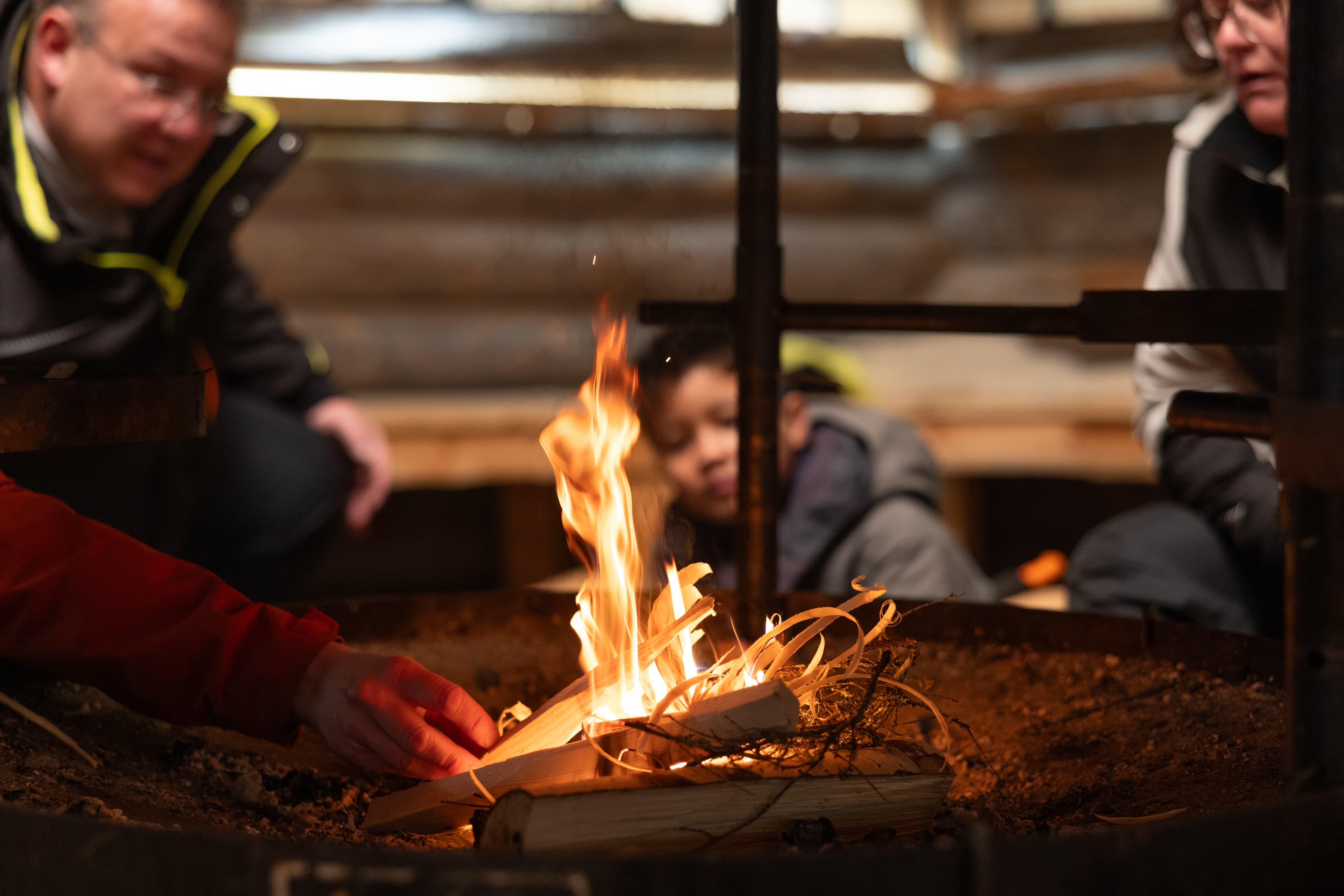
Making fire at -25°C with snow-covered wood is a different skill entirely. Here's what our guides teach about Arctic fire craft during bushcraft experiences in Pyhätunturi.
Fire is the single most important survival skill in the Arctic. Not navigation. Not shelter building. Fire. Everything else follows from the ability to create warmth and light in conditions that actively resist both.
During our Arctic Bushcraft Skills experiences in Pyhätunturi, fire making is always the first thing we teach. Here's why it matters and what you'll learn.
Why Arctic Fire Making Is Different
Starting a campfire in summer is straightforward. Gather dry wood, strike a match, enjoy. At -25°C in Lapland, every step of that process changes.
The wood is frozen. Snow covers everything. Your fingers are numb. Matches become difficult to grip. The moisture content of surface-level wood is too high to catch. And the cold itself works against combustion: you need more energy to bring frozen materials to ignition temperature.
This is why traditional Arctic fire making is a genuine craft, not just a camping trick.
Finding Dry Material Under Snow
The first lesson surprises most guests: the best fire-starting material is never on the ground. In winter, everything at ground level is buried in snow or saturated with ice crystals. Instead, we look up.
- Standing dead spruce: Dead trees that remain upright stay drier than anything on the forest floor. The lower dead branches of spruce trees, protected by the canopy above, are often bone-dry even in deep winter.
- Birch bark: The papery outer bark of birch trees contains natural oils (betulin) that burn even when damp. Peeling thin strips from a fallen birch provides excellent tinder.
- Fatwood: The resin-saturated heartwood of old pine stumps is nature's fire starter. It shaves into curls that catch a spark instantly. Finding fatwood in the forest is a skill our guides teach on every trip.
The Fire Lay
In the Arctic, you can't just pile wood on the snow and light it. The fire will melt through and extinguish itself. Our guides teach a platform fire lay: a base of thick green logs placed on the snow to create a stable, insulated platform. The fire burns on top of this platform rather than sinking into the snowpack.
Above the platform, the structure matters. We typically use a modified log cabin lay: alternating layers of progressively thicker wood with tinder and kindling at the centre. This creates airflow channels that feed oxygen to the young flame.
Lighting Methods
We teach multiple methods, because in a real situation, your first option might not be available:
- Ferro rod (fire steel): The most reliable Arctic method. A ferro rod works at any temperature, in any weather, and produces sparks hot enough (3,000°C) to ignite birch bark and fatwood shavings. Every one of our guides carries one.
- Matches: Work well if you can keep them dry and if your hands are functional enough to strike them. Storm matches are more reliable than standard ones.
- Bow drill: The traditional friction method. Technically possible in winter, but significantly harder. We demonstrate it as a survival fallback.
What You'll Learn on a Bushcraft Experience
A typical Arctic Bushcraft Skills session with Outdoor Artisans runs 4 to 5 hours and covers fire craft as the central skill, alongside:
- Identifying and harvesting natural fire materials
- Knife work and wood processing
- Emergency shelter construction from spruce branches
- Cooking over an open fire
- Reading animal tracks in the snow
The session always ends with food cooked over the fire you built yourself. There's something deeply satisfying about eating a meal you prepared from flame to plate in an Arctic forest.
Why It Matters Beyond Survival
Most of our guests will never face a genuine survival situation. But fire craft teaches something valuable regardless: patience, observation, and connection to the environment. Reading the forest for materials, understanding how temperature and moisture interact, working with your hands in challenging conditions. These are skills that sharpen your awareness of the natural world in a way that few other activities can.
The Sámi and Finnish woodspeople who developed these techniques over centuries didn't just know how to survive in the Arctic. They knew how to live here. Learning even the basics of their craft gives you a small window into that relationship.
Ready to learn? Check our bushcraft experiences or contact us to arrange a session during your visit to Pyhätunturi.
Experience It Yourself
Book one of our guided Arctic adventures in Pyhätunturi


