
Rovaniemi is on the aurora oval, but the city's light pollution makes northern lights viewing frustrating. Here's where to go for truly dark skies - and the most extraordinary way to watch the aurora in Lapland.
Rovaniemi sits directly beneath the auroral oval - the ring of geomagnetic activity that circles the Arctic and produces the northern lights. In theory, it is one of the best cities in the world for aurora viewing. In practice, there is a problem: it is a city.
Light pollution from 65,000 residents, street lamps, commercial signage, hotel exteriors, and the general ambient glow of an urban area means that even when the aurora is active, what you see from central Rovaniemi is a pale, washed-out version of what the sky is actually doing. The camera might capture green streaks. Your eyes see something less impressive.
This is not a criticism of Rovaniemi - every city has this issue. But it matters because many visitors fly to Rovaniemi specifically for the northern lights and find themselves disappointed. The aurora they imagined - vivid curtains of colour filling the sky, dancing and pulsing with visible movement - requires darkness. Real darkness. And that means leaving the city.
Understanding Northern Lights Visibility
Before discussing where to go, it helps to understand what determines whether you see a good aurora display:
Geomagnetic Activity (Kp Index)
The Kp index measures geomagnetic disturbance on a scale of 0-9. For northern lights visible to the naked eye in Lapland, you generally want Kp 3 or above. At Kp 5-6, the display can be spectacular. At Kp 7+, the aurora can fill the entire sky from horizon to horizon.
The Finnish Meteorological Institute provides aurora forecasts at ilmatieteenlaitos.fi, and apps like "My Aurora Forecast" give real-time notifications when conditions are favourable.
Cloud Cover
This is the factor that ruins more aurora evenings than any other. The northern lights occur at altitudes of 100-300 km. Clouds sit at 1-10 km. If there is cloud cover, you see nothing regardless of how active the aurora is. Finnish Lapland has relatively clear skies in late winter (February-March), while December-January can be cloudier.
Light Pollution
This is where location matters enormously. A Kp 4 aurora in dark skies is visually more impressive than a Kp 6 aurora seen through urban light pollution. Weak displays that are invisible from a lit area can be breathtaking from a dark location. Dark skies don't just make the aurora look better - they make it visible in the first place.
Moon Phase
A full moon adds significant ambient light to the sky. For the darkest possible conditions, time your trip around the new moon. That said, moonlight is much less problematic than urban light pollution, and strong aurora displays are visible even under a full moon.
Best Spots Near Rovaniemi for Northern Lights
Driving Out of Town (30-45 Minutes)
The simplest approach is to drive 30-45 minutes from Rovaniemi's centre in any direction along the main highways. North toward Sodankylä on Highway 4, east toward Kemijärvi, or northwest toward Kittilä all take you into progressively darker territory. Look for a lake or open field where you have a clear view of the northern sky, pull over, and wait.
Tips for roadside aurora watching:
- Park completely off the road and turn off all lights, including interior lights and phone screens
- Allow 15-20 minutes for your eyes to fully dark-adapt
- Dress for standing still outdoors in temperatures that may be -20°C to -30°C
- Bring a thermos of hot drink
- Stay until at least midnight if conditions are favourable - aurora activity often peaks between 22:00 and 02:00
This approach works, but it has limitations. You are standing in the cold beside a road, possibly for hours, with nothing to do but wait and hope. If the aurora doesn't appear, you have a cold, disappointing evening.
Guided Aurora Tours from Rovaniemi
Several operators offer aurora chasing tours from Rovaniemi, typically involving a minibus that drives to spots the guide considers optimal based on cloud cover and activity forecasts. Some include a campfire, hot drinks, and tripods for photography.
These tours are reasonable if you don't have a car. The guides generally know the area well and can chase gaps in cloud cover. The main drawbacks are the cost (typically 80-150 EUR per person), the group size (can be 10-20 people), and the fact that you are still within the general light-pollution zone of Rovaniemi and its surrounding settlements.
Pyhätunturi: Dark Skies in a Different Category
This is where the conversation changes fundamentally. Pyhätunturi sits 130 km northeast of Rovaniemi, surrounded by Pyhä-Luosto National Park and vast stretches of uninhabited forest. The nearest settlement of any size is Sodankylä, 50 km away. There are no major roads producing headlight glare, no commercial districts, no street light networks.
The result is darkness of a quality that most modern Europeans have never experienced. On a moonless night at Pyhätunturi, the Milky Way is not a faint smudge - it is a bright, textured band across the sky with visible structure and colour. Stars are visible down to the horizon in every direction. And when the aurora appears in these conditions, the display is transformative.
What Dark Skies Mean for Aurora Viewing
In truly dark conditions, you see details in the aurora that are invisible from lit areas:
- Colour range: The green oxygen emission at 557.7 nm is always the most visible, but in dark skies you can clearly see the red upper border (630 nm), violet fringes, and occasionally the rare blue-purple of nitrogen emissions
- Structure: Individual curtain folds, ray structures pointing toward the magnetic zenith, and the rapid flickering of pulsating aurora become visible in darkness but wash out in light pollution
- Movement: The dynamic motion of a strong aurora - the rippling, folding, and surging - is much more apparent against a truly dark sky
- Photography: Dark skies produce dramatically better aurora photographs. Shorter exposures, lower ISO, sharper detail, and no light-pollution gradient ruining the lower portion of the frame
Aurora Floating: The Experience That Changes Everything
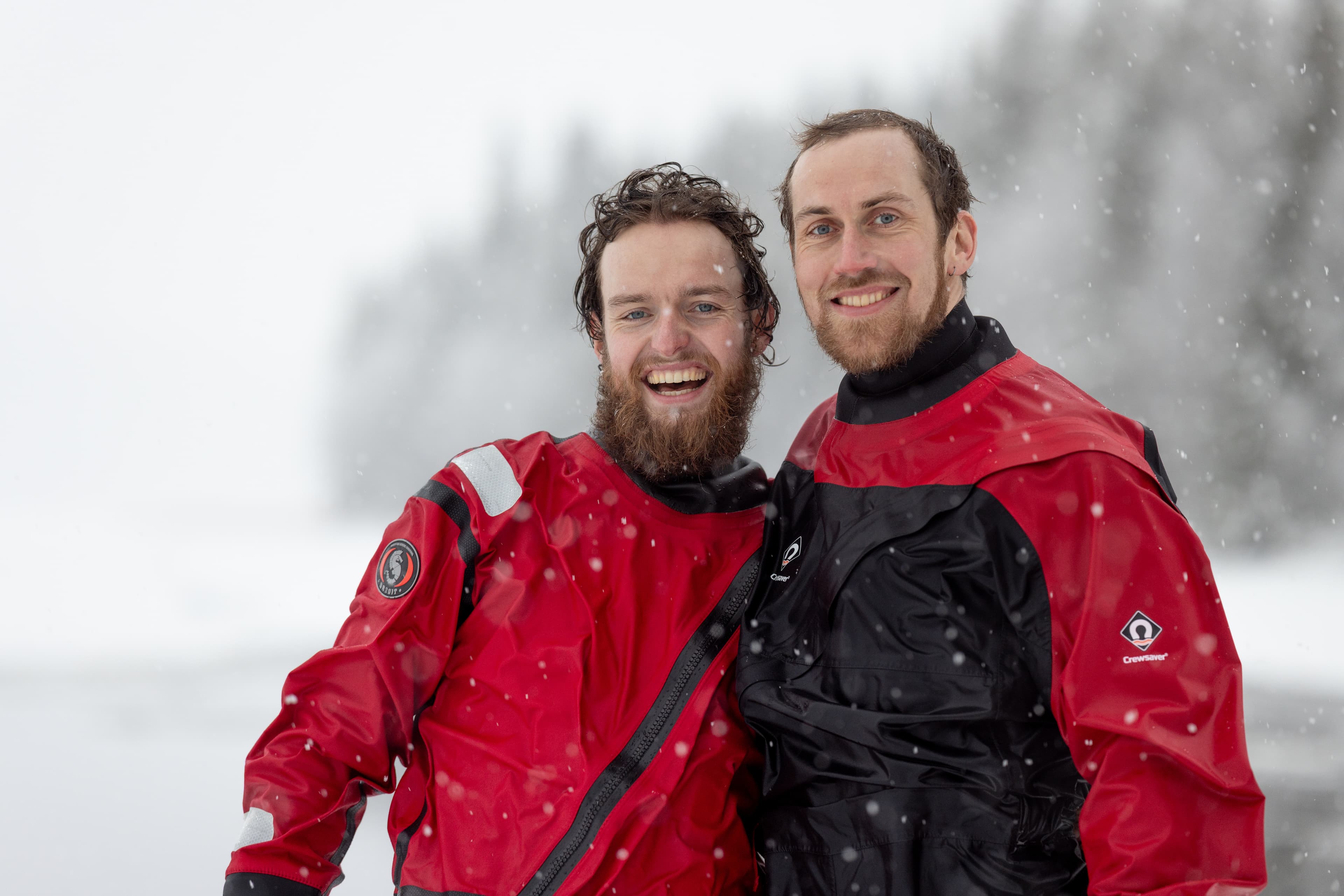
At Pyhätunturi, Outdoor Artisans offers something that exists in very few places on earth: aurora floating. You wear a thermal dry suit, step into an opening in the frozen lake, lean back, and float on your back looking directly up at the sky.
The physics of this position matters. When you are standing, your natural gaze is horizontal. Watching the aurora means tilting your head back, straining your neck, and seeing only a portion of the sky at a time. When you are floating, your entire field of vision is sky. You see the aurora from horizon to horizon simultaneously, without moving your head.
The silence matters too. Floating on a frozen lake, you hear only your own breathing and the faint sounds of water touching ice. No engine noise, no group chatter, no shuffling feet in snow. The aurora is not competing with sensory noise - it fills your attention completely.
When the northern lights appear during a float - green curtains rippling directly overhead, reflected in the dark water around you - it is one of those experiences that rewires your sense of what is possible. Guests consistently describe it as the single most memorable moment of their Lapland trip, and often of their lives.
Best Times to See Northern Lights in Lapland
Aurora season in Finnish Lapland runs from September to March. Within that window:
- September - October: Aurora season begins as nights get dark again after the midnight sun. Temperatures are still mild (-5°C to +5°C). Autumn colours can combine with aurora for extraordinary photography
- November - December: The darkness deepens toward polar night. Long nights mean more potential viewing hours. Cloud cover can be higher during this period
- January: Polar night in northern Lapland means near-total darkness around midday, and aurora can occasionally be seen in the early afternoon. Cold temperatures (-20°C to -35°C) but often clearer skies
- February - March: Statistically the best aurora months. The spring equinox effect increases geomagnetic activity, skies tend to be clearer, and temperatures are beginning to moderate. March in particular combines long dark nights, frequent clear skies, and high aurora activity - the ideal combination
Photographing the Northern Lights
For those wanting to capture the aurora, here are the essentials:
- Camera: Any camera with manual exposure control. A mirrorless or DSLR with a full-frame sensor produces the best results, but modern phones (iPhone 14+, Samsung S22+) can capture impressive aurora shots in night mode
- Lens: Wide-angle (14-24mm equivalent), fast aperture (f/2.8 or faster)
- Settings: ISO 1600-6400, f/2.8, exposure 5-15 seconds depending on aurora brightness and movement speed. Faster aurora requires shorter exposures to avoid blur
- Tripod: Essential. No handheld exposure will work
- Batteries: Cold kills batteries rapidly. Carry spares in an inner pocket close to your body
- Focus: Manual focus set to infinity. Autofocus will hunt in the dark and miss
The single biggest factor in aurora photography is the same as visual viewing: dark skies. The same camera settings that produce a mediocre shot from a light-polluted location will produce a stunning image from Pyhätunturi's dark skies.
Planning Your Northern Lights Trip
If seeing the northern lights is a priority for your Lapland trip, here is our recommendation:
- Fly into Rovaniemi. It is the most accessible gateway to Lapland
- Rent a car. You need mobility to chase clear skies
- Drive to Pyhätunturi (1.5 hours). Base yourself there for at least 2-3 nights to give yourself multiple chances at clear skies
- Book aurora floating with Outdoor Artisans. Even if the aurora doesn't appear on your particular evening (it depends on solar activity and cloud cover), floating in a frozen lake under the Arctic stars is an extraordinary experience in itself
- Stay flexible. If the forecast is poor for one evening, fill the day with ice fishing, bushcraft, or snow surfing, and try again the next night
- Allow at least 3 nights. Statistics suggest you have roughly a 70% chance of seeing aurora on any given clear night during peak season at this latitude. Over 3 nights, your cumulative odds are very good
The difference between watching the northern lights from a Rovaniemi car park and watching them from a frozen lake at Pyhätunturi is not incremental. It is the difference between seeing a concert on a phone screen and being in the front row. Both are the same event. Only one changes you.
Vivez l'expérience
Réservez une aventure arctique guidée à Pyhätunturi


