
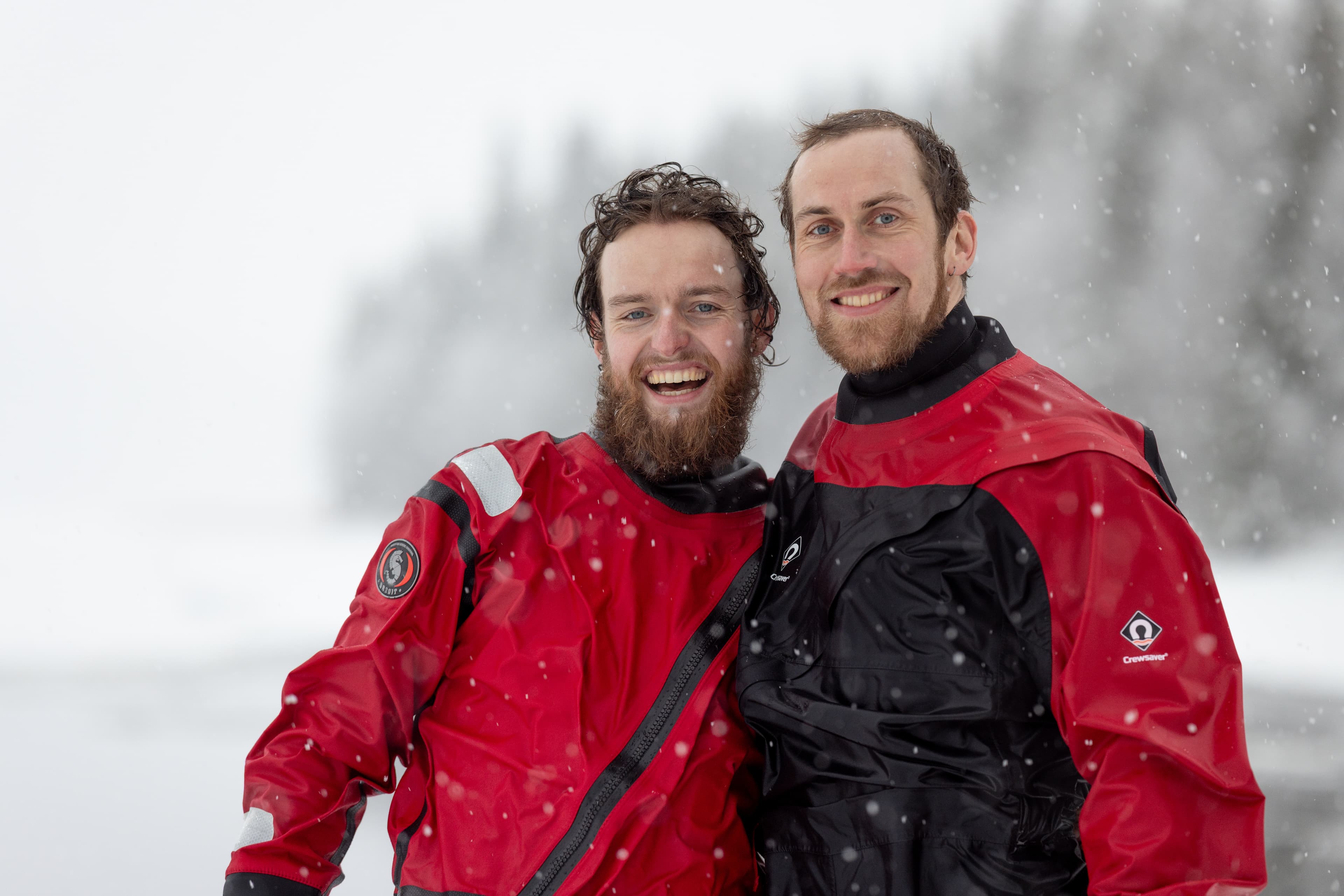
February is Finnish Lapland's best-kept secret: perfect ice, long aurora nights, half-term availability. Discover Pyhätunturi's winter magic.
Lapland in February: Why This Is the Arctic's Best-Kept Secret
February is the month that experienced Lapland travellers keep coming back to. After the Christmas crowds have gone and before the spring melt begins, Finnish Lapland in February enters a window of near-perfect conditions: reliable lake ice at its thickest, long aurora nights, fresh powder on the fells, and a quieter atmosphere that lets the wilderness speak for itself. At Pyhätunturi, set inside Pyhä-Luosto National Park, roughly two hours north of Rovaniemi, February is the season when every Arctic adventure activity reaches its peak.
Aurora Floating in February: The Northern Lights at Their Most Dramatic
February nights in Finnish Lapland last roughly 15 hours, long enough for multiple aurora windows in a single evening, with darkness falling before 5 PM and not lifting until nearly 9 AM. This makes aurora floating one of the defining experiences of a February visit to Lapland.
The activity is exactly what it sounds like: you float on a frozen lake at night, inside a dry suit that keeps you warm and buoyant, watching the northern lights move overhead. The combination of water, silence, and light is extraordinary at any time of year. In February it becomes something else entirely. The sky stays dark long enough for the aurora to perform fully. Temperatures are cold enough to produce the sharp, clear air that makes displays pop against a black sky. The surrounding spruce forest is still buried under its deepest snowpack of the year, and the only sound is your own breathing.
Outdoor Artisans schedules aurora floating sessions at Pyhätunturi on evenings when KP-index forecasts are favourable. In February, aurora activity is statistically strong and cloud-free periods are frequent. This is peak season for a reason.
Ice Floating Experience in February: Perfect Ice, Perfect Light
The lakes of Pyhä-Luosto National Park freeze to their full depth in January and hold that ice through most of March. February is the heart of this window: the ice is at its thickest and most stable, the surface is smooth and workable, and conditions for the ice floating experience are at their very best.
Floating on your back in a dry suit, completely warm and dry despite the water below - surrounded by snow-laden spruce trees and absolute silence, while the temperature outside sits at -15°C, produces a state of calm that guests consistently describe as unlike anything else they have experienced. No swimming required, no cold-water shock: the suit does everything. You simply float, breathe, and look at the sky.
February also brings a quality of light that is uniquely beautiful in Finnish Lapland. The sun stays low on the horizon for the few hours of daylight, casting long blue shadows across the snow and turning the ice a shade of pale gold in the late afternoon. A daytime floating session in these conditions has an almost otherworldly quality that peak-season photographs rarely capture.
Arctic Bushcraft in February: The Wilderness at Its Most Demanding
February is the ideal month to test real Arctic bushcraft skills. Snow depth in Pyhä-Luosto typically reaches 70–100 cm, temperatures can drop to -25°C on clear nights, and fire-making in these conditions requires genuine technique rather than mild-weather shortcuts.
Outdoor Artisans' Arctic Bushcraft Skills programme covers fire-making with natural materials, shelter construction in deep snow, and wilderness navigation across the fell landscape. February conditions make every skill feel purposeful. This is not bushcraft as a summer hobby, but bushcraft as the practical cold-climate knowledge that kept people alive in Finnish Lapland for thousands of years.
For those who want a full day in the wilderness, the Arctic Bushcraft and Ice Floating combination brings both experiences together in a single day: build a fire and learn shelter skills in the forest in the morning, then step into the lake in the afternoon for the contrast of warm competence followed by cold-water serenity.
Ice Fishing in February: When the Lakes Are at Their Deepest Freeze
February is the traditional heart of ice fishing season in Finnish Lapland. The ice is fully formed and stable, the fish are active at depth, and the stillness of a February morning on a frozen lake, the sound of the drill, the line dropping, and occasionally a flag rising, is one of the most genuinely meditative outdoor experiences the Arctic offers.
Outdoor Artisans' Arctic winter fishing sessions take place on the lakes of Pyhä-Luosto National Park, guided by instructors who know exactly where perch and trout hold through February. A morning on the ice is typically followed by cooking the catch over a fire on the lakeshore, a complete wilderness experience in a few hours.
For those who want to combine ice fishing with other activities, the ice fishing and ice floating combination is a full-day programme that pairs the patience of fishing with the immediacy of floating, two completely different ways to experience the same frozen landscape.
Practical Information for Lapland in February
Weather and temperatures
February in Pyhätunturi brings average daytime temperatures of -10 to -18°C, with nights regularly reaching -20 to -25°C on clear days. Finnish Lapland's cold is dry, and with proper layering it is entirely manageable. Outdoor Artisans provides dry suits for all water activities, which means water temperature is a non-issue regardless of air temperature. Dress in warm wool base layers and mid-insulation, the guides will brief you on everything else.
Daylight hours
By early February, daylight in Pyhätunturi has grown to about 6 hours per day, increasing rapidly toward the equinox. By late February, days stretch to nearly 9 hours, enough for a full programme of outdoor activities. The combination of short bright days and long aurora nights makes February ideal for splitting your time: bushcraft and ice activities during the day, aurora watching or aurora floating in the evenings.
Half-term and school holiday timing
February is peak booking season for Lapland because it coincides with school holiday windows across Europe: the UK half-term typically falls in the third week of February, while French school zones stagger their February holidays across the month, and several German states have similar windows. If you are planning a February visit, booking activities at least 6–8 weeks in advance is essential, Outdoor Artisans limits all sessions to small groups, and February availability fills quickly.
Getting to Pyhätunturi
Pyhätunturi is served by flights into Rovaniemi (130 km south) and Kittilä (approximately 100 km northwest). Both airports receive direct winter charter and scheduled flights from Helsinki, London, and other European cities throughout the ski season. Road transfer from Rovaniemi takes approximately 1 hour 45 minutes along well-maintained Arctic highway. Outdoor Artisans can advise on transfer options on request.
February in Lapland versus December or January
December is magical for Christmas atmosphere and the first deep snow, but Rovaniemi's tourist infrastructure is at capacity and prices are at their peak. January is quieter and excellent for aurora chasing, but the days are at their shortest. February in Lapland combines the best of both: reliable ice and snow, long aurora nights, more daylight than January, and prices and crowd levels that have settled from the Christmas peak.
Pyhätunturi's position within Pyhä-Luosto National Park distinguishes it from Rovaniemi at any time of year. The fell landscape here is wilder, the lakes are more remote, and the activities offered by Outdoor Artisans are built for those who want a genuine Arctic wilderness experience rather than a packaged resort stay. In February, when conditions are at their best and the crowds have thinned, this is as close to authentic Finnish Lapland as it gets, and it is ready for you.
Vivez l'expérience
Réservez une aventure arctique guidée à Pyhätunturi


